
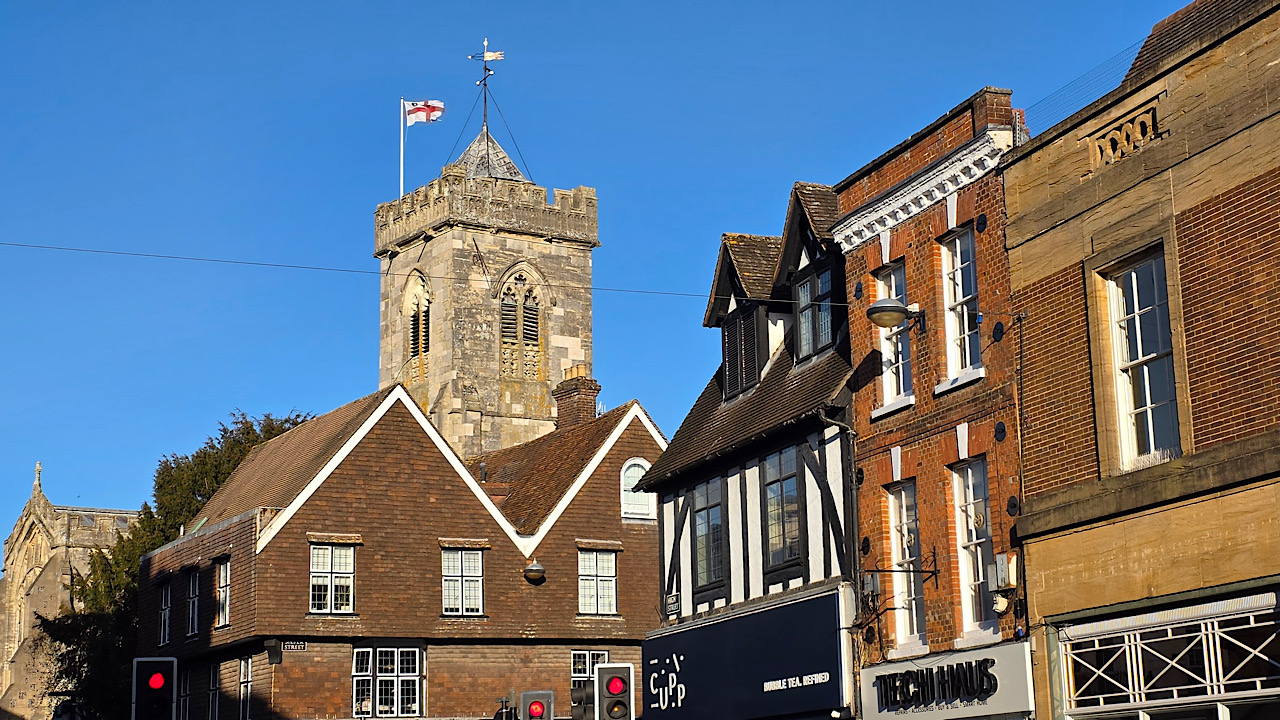
Wiltshire’s cathedral city of Salisbury has a number of surprising draws, which can easily be bypassed by the lure of Hampshire’s New Forest. Yet stay a while and you will uncover ancient history, waterways that weave through the city, historical documents that paved the way for today’s modern laws and plenty of great quality eateries.
Salisbury is a medieval cathedral city in the county of Wiltshire. Bordering Hampshire to the south, Dorset to the west, the city is a great location for exploring what England’s southern coast has to offer. Do not be pulled towards the joys of the New Forest with its 140,000 acres of wilderness and quintessential villages. Stay awhile. Salisbury as a city and its surroundings has plenty to offer. And with its location geographically half way between Exeter and London, has made it a centrepiece for centuries putting Salisbury firmly on the map.
In this blog we will share with you five of the best sights and activities whilst staying in this fabulous city.. Much of it you can do on foot as a walking tour with just a bus or two to get to the outer reaches of the city. So if you’re ready, then come on it and let us show you around. If you like a visual guide, then why not check out our video that gives you a tour of the city through our eyes.
1. Salisbury’s Waterways
With the River Avon, Nadder and Bourne meandering through this city, it adds a lovely feature to the blend of modern versus medieval buildings. Commerciality is not the mainstay of Salisbury by any means. Its waterways are dominant in the way they have shaped livelihoods and the city’s culture.
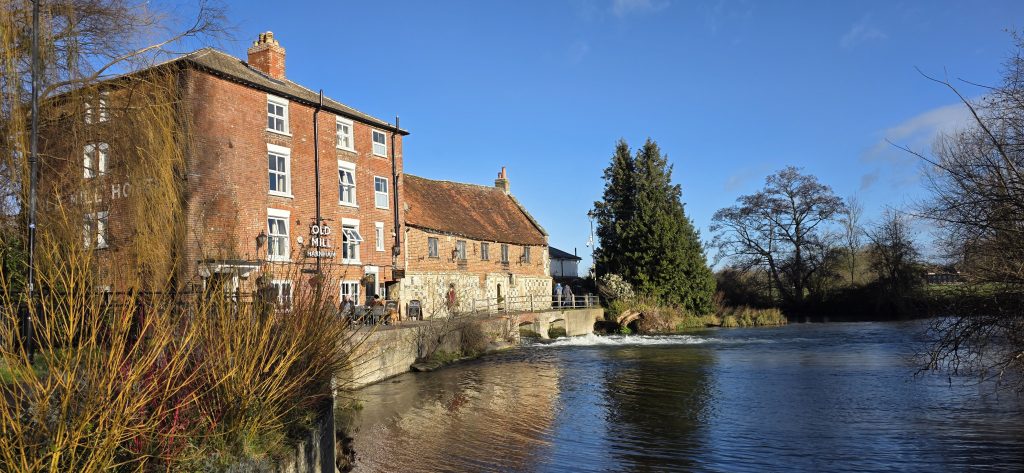
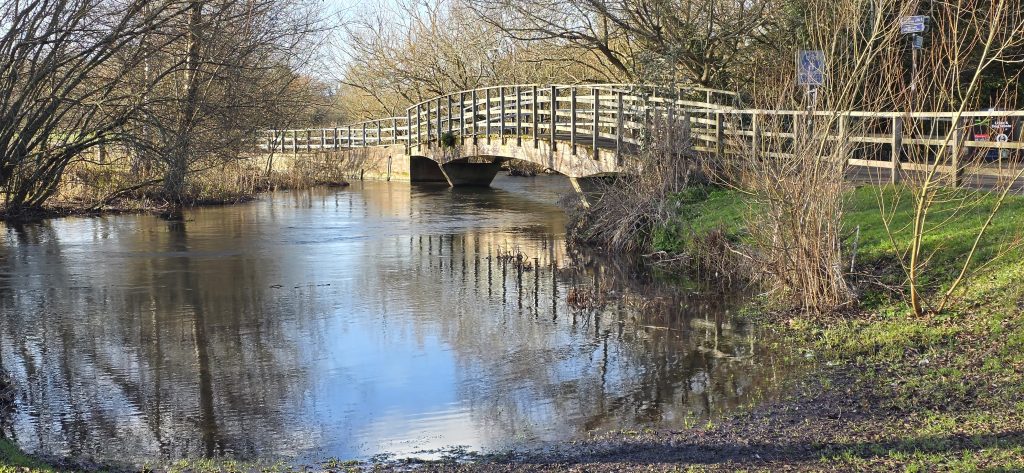
Before we take you into the heart of the city however, we want to start our tour of Salisbury just on the fringes of the urban area. It is at Harnham just half a mile to the south of the city where our exploration must start. The Harnham Mill, now a restaurant and hotel is a centrepiece architecturally and historically to this suburb of Salisbury. You can trace the tales of this mill over five centuries. Built in between two branches of the Nadder River, it was, in its former life a flour and paper mill during the 16th century. Then in the 1930’s it was converted into a hotel. Walking over the mill’s bridge gives you your first atmospheric step into the past, which if you stay in the city centre you miss. And yet this area is culturally significant to the shape of Salisbury particularly back in the 17th century.
As you walk along the Town Path towards the iconic cathedral steeple there are two things of note. One are the meadows, ditches and channels that shape the land. These are important man-made meadows that during the winter months would be ‘drowned’ by releasing water from the Nadder into the fields. This promoted early grass growing to support their sheep flocks. Even today, natural flooding can often occur as Salsibury’s low lying land and waterways become inundated with seasonal rains. The second noteworthy observation is as you look beyond towards the cathedral. For the artists in you, you might just recognise the scene. This is the basis for a famous landscape painting by none other than John Constable. He was drawn often to Salisbury and he was said to review his paintings from this area as some of his best.
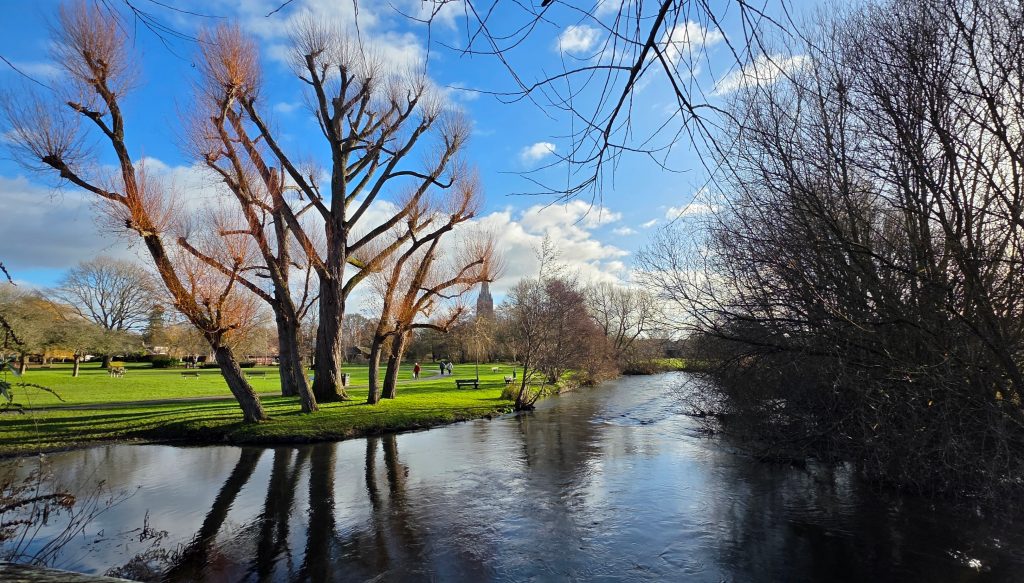
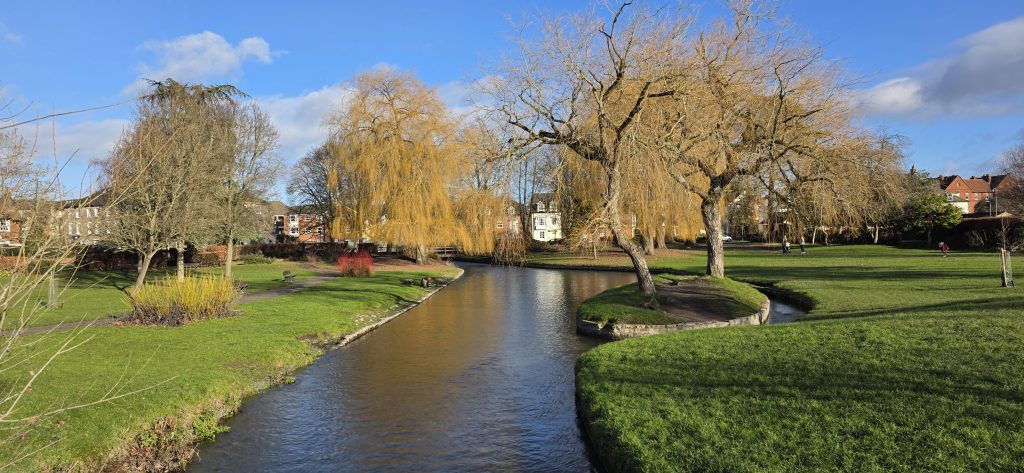
Walking towards the town, the River Avon becomes more predominant in the shape of the city. The Queen Elizabeth gardens are embraced by the river’s meandering passage and makes a lovely approach into town.
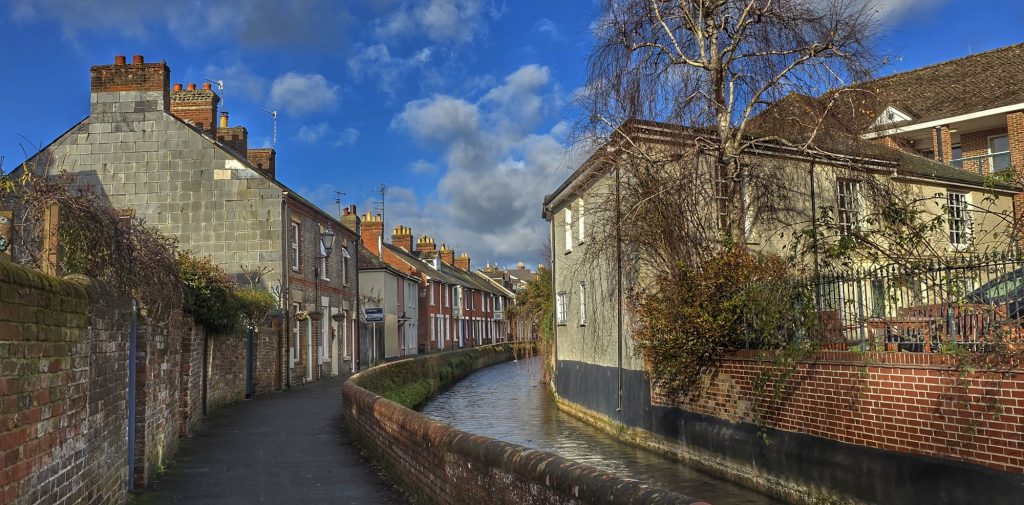
And if you take the characterful Water Lane path, you can see how the cottages formed a precarious barrier alongside the river. The floods of 1915 put these properties under extreme danger and yet today the protective wall offers some safety measures.
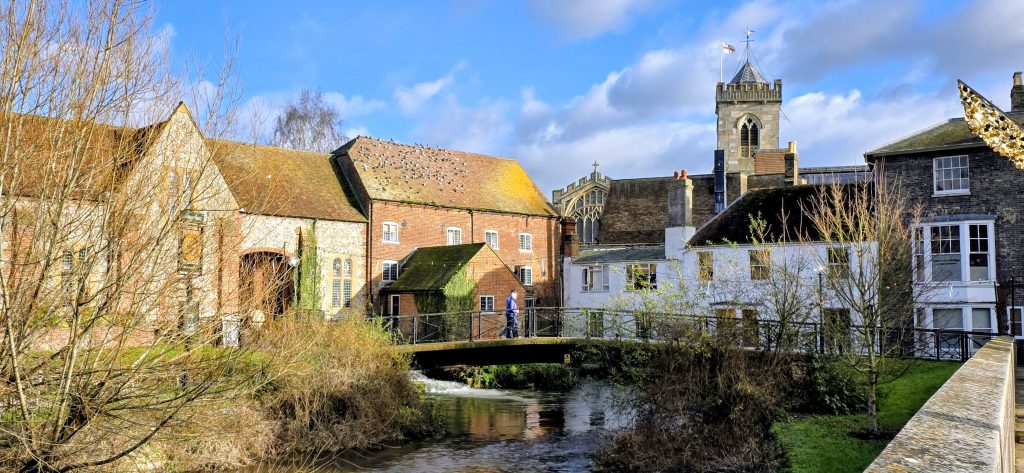
Heading towards the city along Fisherton Street, the river holds onto its influence as we see it shaping yet another mill at The Maltings. Built in 1867, the Maltings was the site for the Hull Brewery Company which was renovated into a shopping mall that gives it a charming yet commercial feel. Yet the water can not be tamed and Salisbury’s waterways definitely rule the lay of the land. You can follow the river north towards Old Sarum and one of the two campsites that we will talk about shortly.
So as you can see, Salisbury’s waterways form a significant geographical and historical feature of this city in a way that perhaps we have never quite considered before.
2. Salisbury’s historical centre
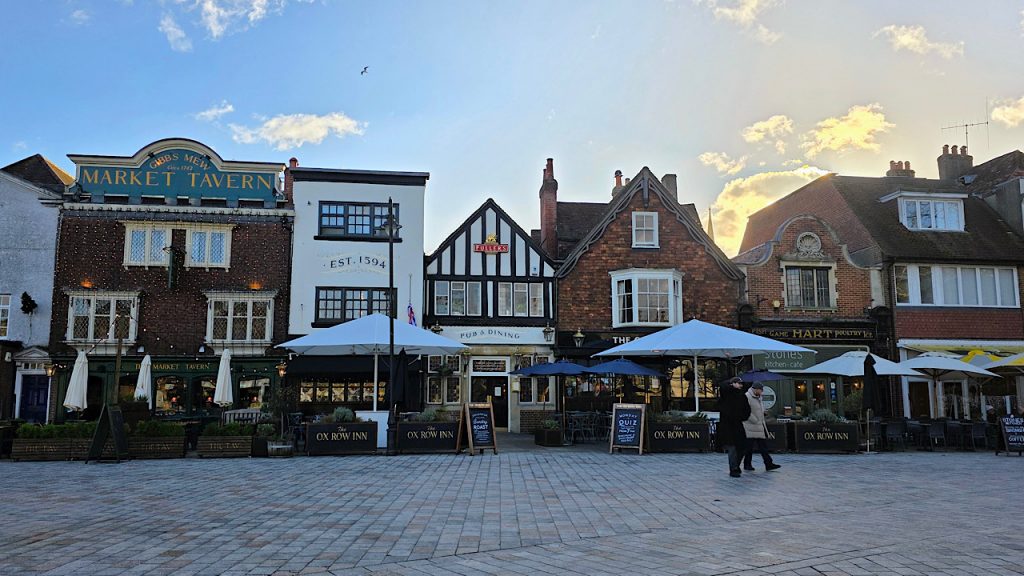
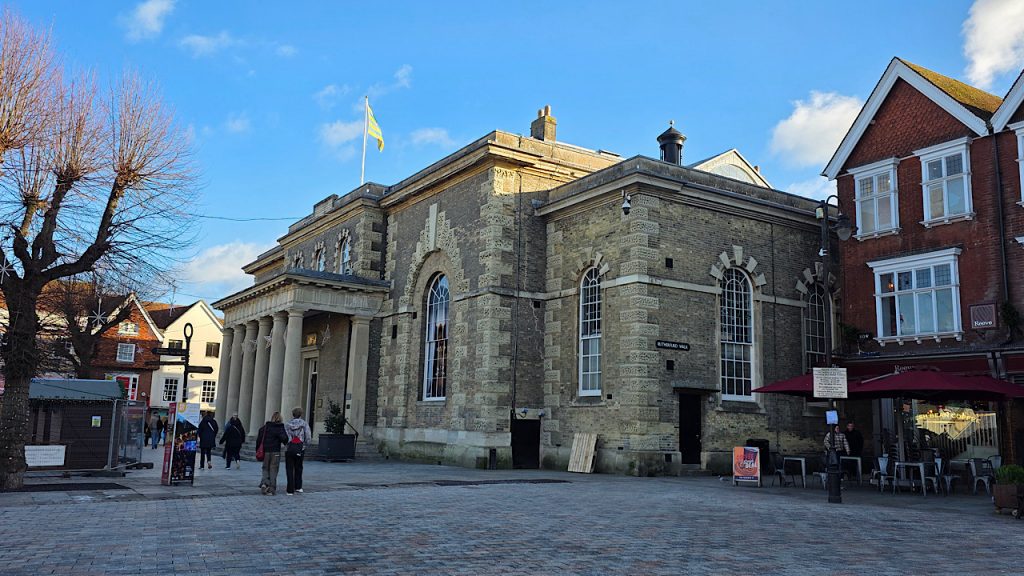
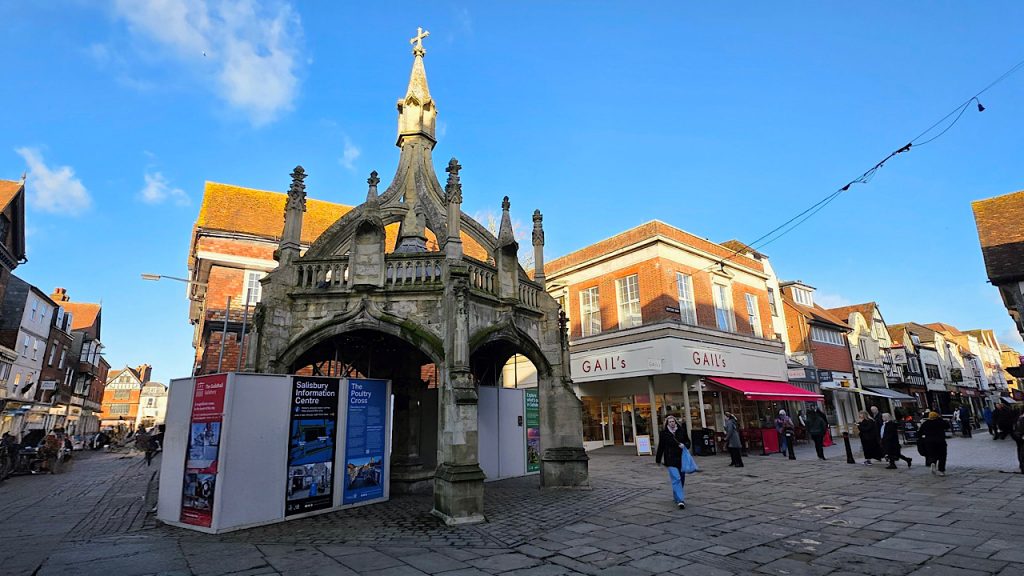
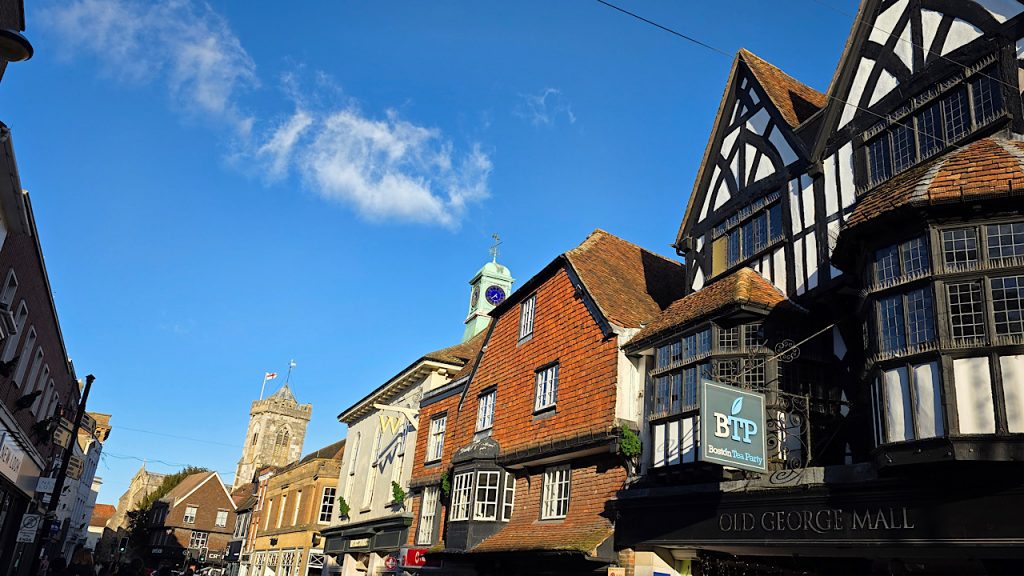
Like most European cities, it is in their heart where you will find much of the stories from the past. Their Plaza Major or their Market Squares, all the hub for our ancestors. Salisbury is no different and in fact, we have never encountered an English city with such a European style square. This central hub is home to the Guildhall, houses on its fringes with a familiar Bruges style character, and on a Tuesday and Saturday you will capture the vibe of an artisan’s market from 8.00am to 3.00pm. Then the place buzzes even through the coldest of winter days, when the locals much like their ancient traders, meet to sell their wares to potential customers. It was great to experience a flavour of this market on a very cold Saturday at the beginning of January.
Heading through the small ginnels of which there are many, you begin to sense the history etched into this city. From the days when traders would travel to and from London and Exeter with a stop off here in Salisbury, to medieval locals who called this place home. The Poultry Cross is a symbol of those times and was an important meeting place dating back to the 1400’s. It is now protected by English Heritage such is its importance to the history books. It is the only remaining cross of the four that used to stand in Salisbury.
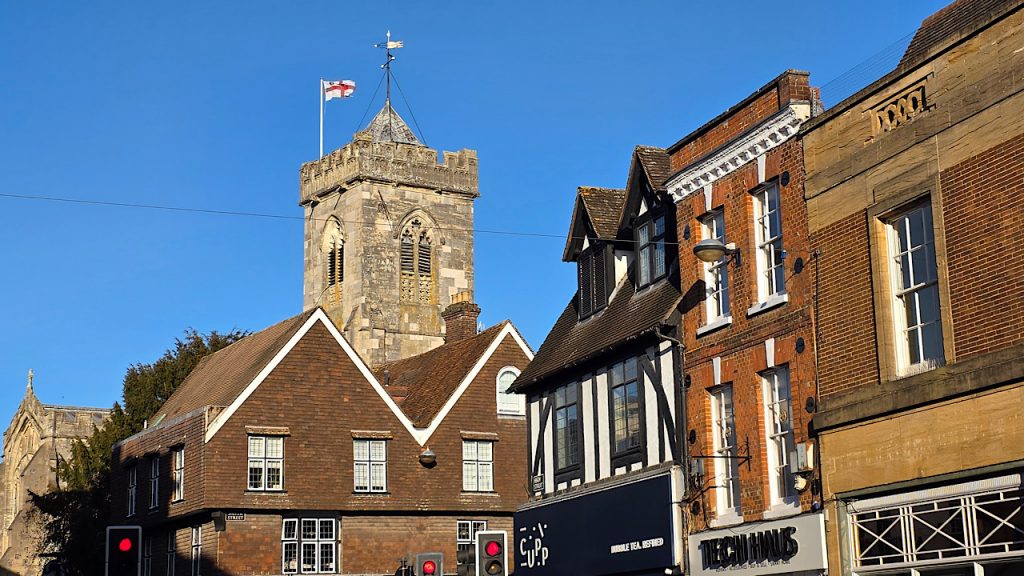
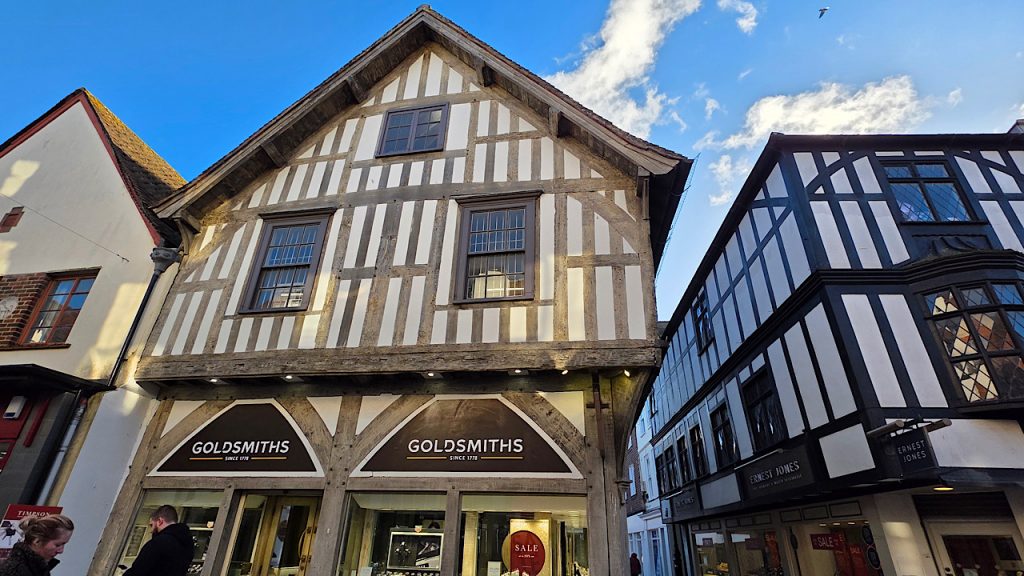
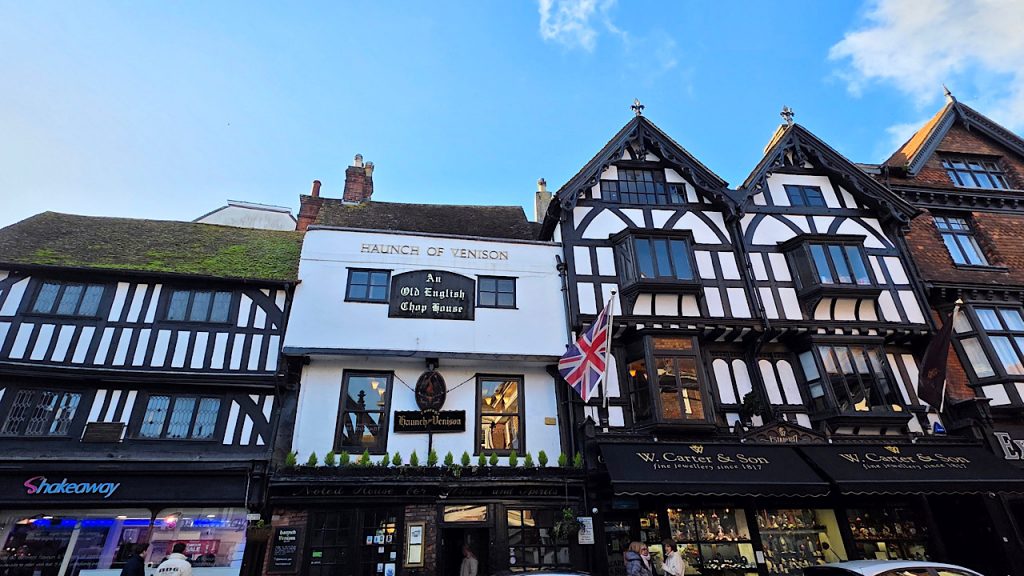
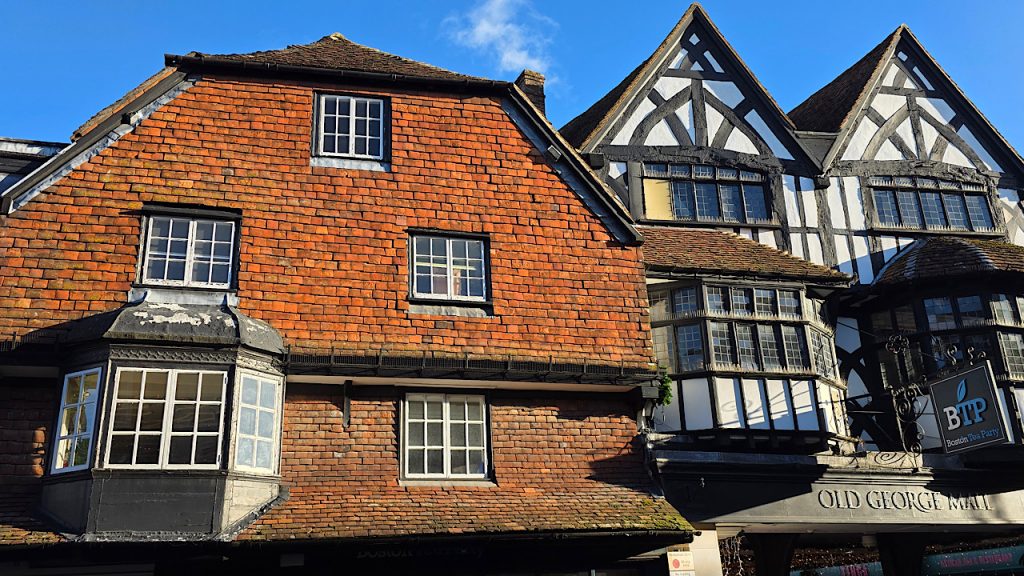
The best piece of advice, to really get a sense of Salisbury’s history isto look up. Above the commercial vulgarity that consumes most towns these days, it is above the shop windows where you can see history preserved. Tudor style buildings, quirky, crooked walls and carvings that tell you far more about the place than the street level consumerism. Salisbury, much like many English cities is proud of its heritage and up is definitely the way to appreciate it.
3 and 4. Salisbury’s cathedral and Magna Carta
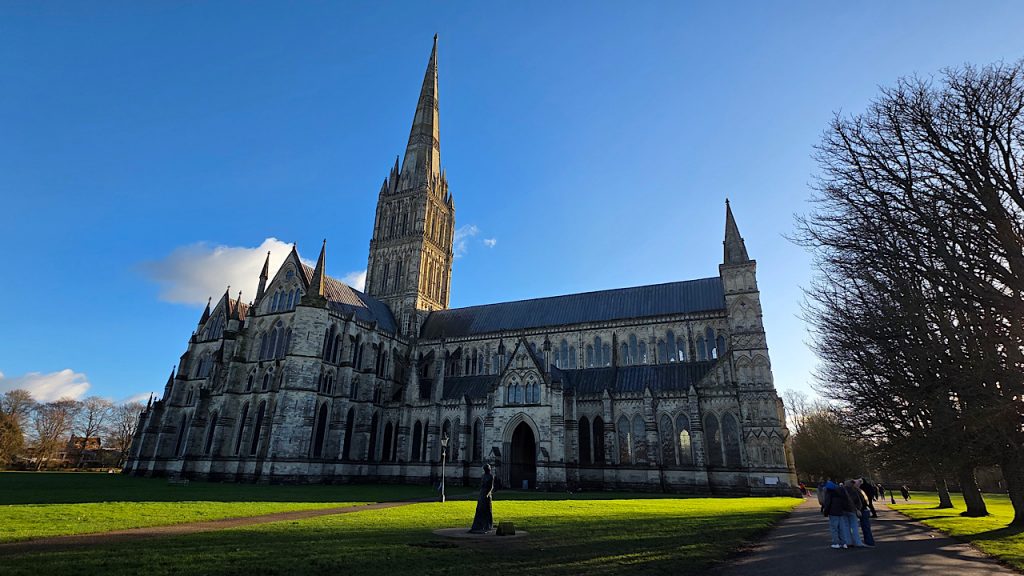
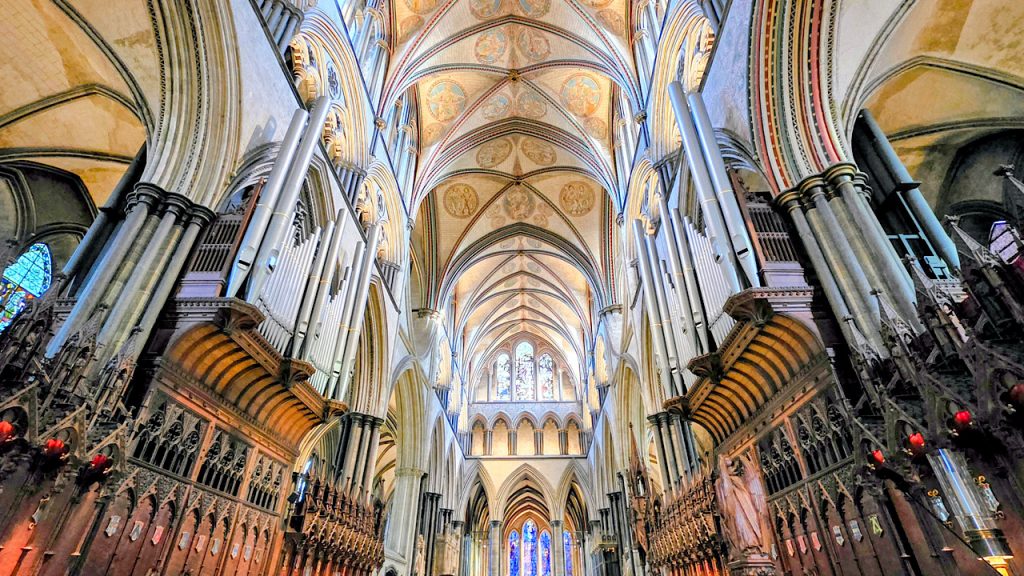
This is definitely a two for the price of one feature of Wiltshire’s Salisbury. Dominating the landscape for miles around, it is easy to see why Salisbury’s cathedral, built in 1220, draws people to it, irrespective of their religious perspectives. Yet this particular building with its towering 123m tall spire, has a few secrets hidden up its proverbial cloak.
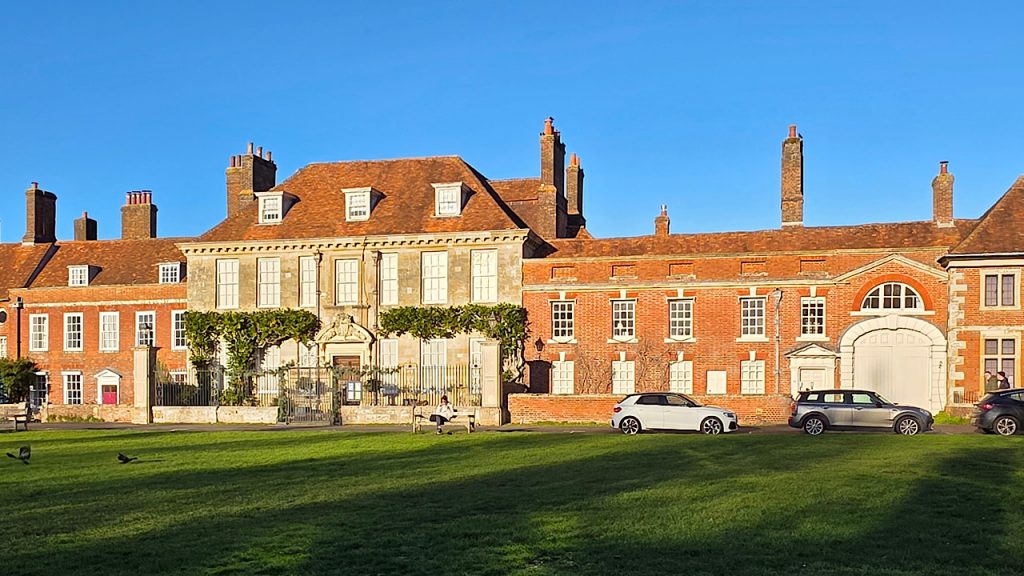
Not only does it have the most impressive Cathedral Close dominated, as you might imagine with some fancy houses belonging to the clergy back in the day. It also has Arundells, which is the former house of UK Prime Minister Edward Heath. Add to that the impressive Mompesson House museum which offers a peek into life in the 18th century, now owned by the National Trust and open during the summer months.
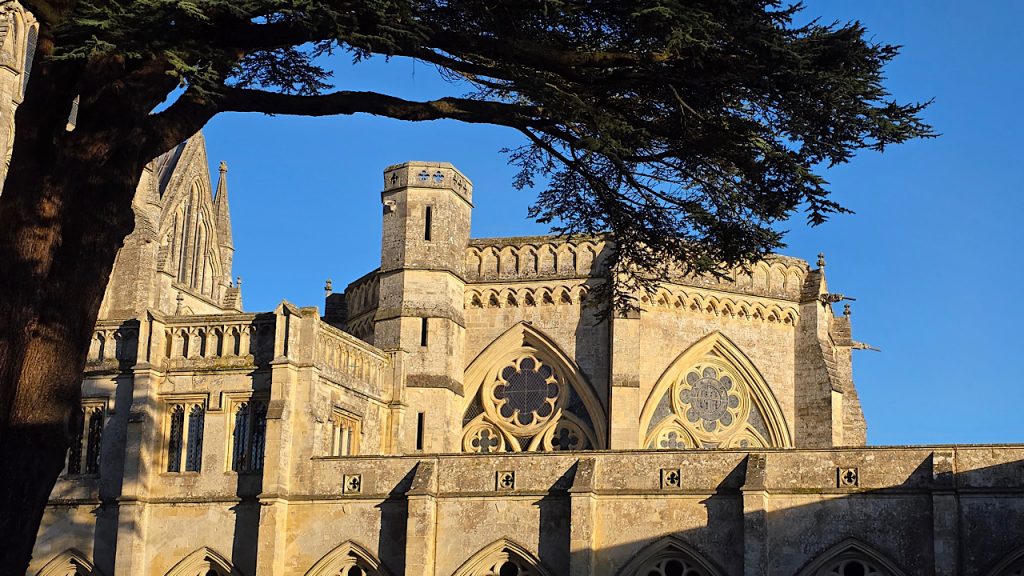
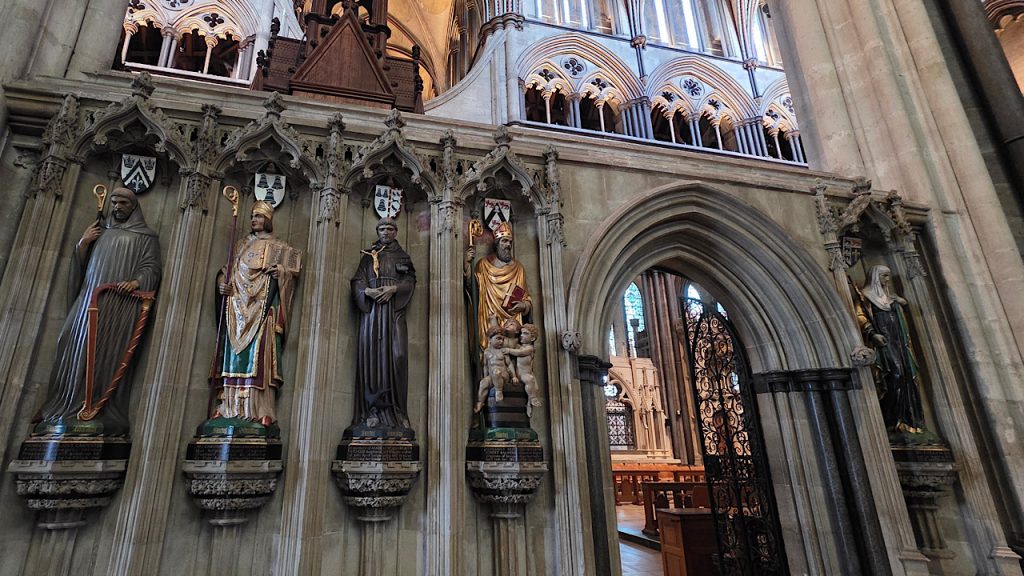
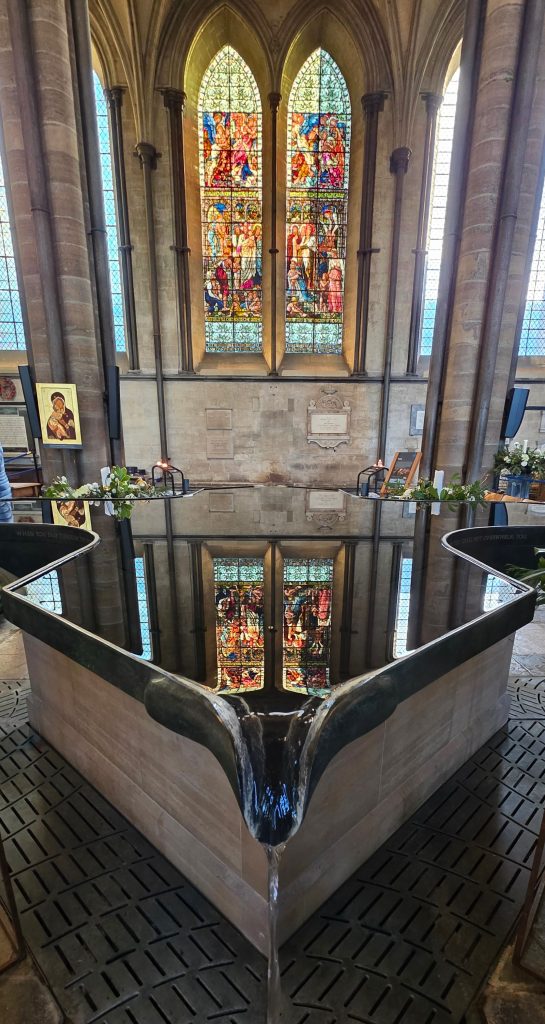
Now all that said, it is the magnificent architecture, inside and out of the cathedral that calls us most. And for free you can wander around the quintessential Cloisters in the inner sanctum of the cathedral building. Although for an investment of £13 (£11 if you book online) you can gain entry to the heart and soul of the church. And it is well worth the price as the design is something else. 800 years of history stare right back at you from all angles. The reflections of the font alone will have you clicking with your camera, let alone the lofty ceiling that will have you inhaling in awe. And you cannot miss (like I did) the world’s oldest mechanical clock, thought to date back to 1386, located in the left hand side of the church.
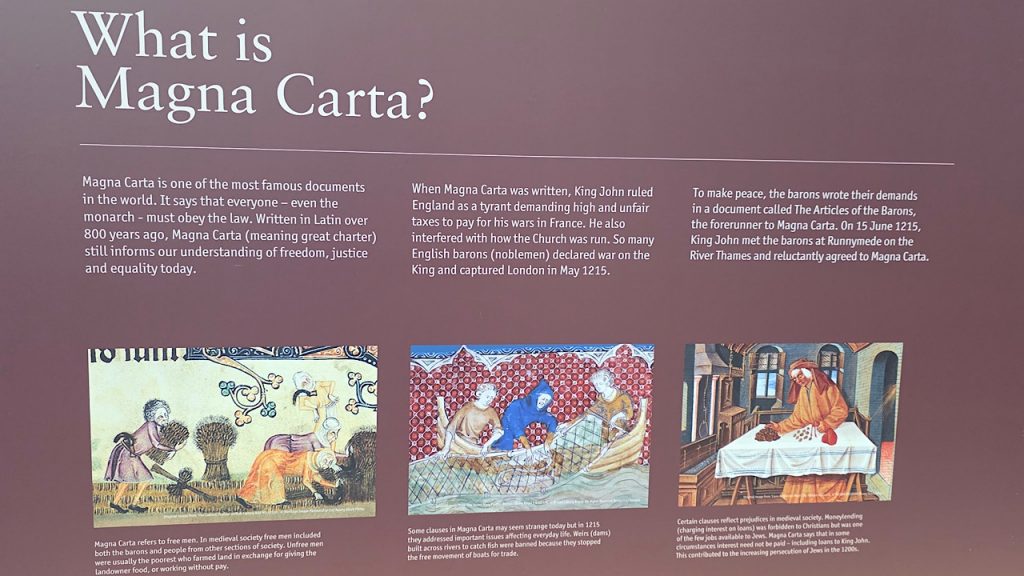
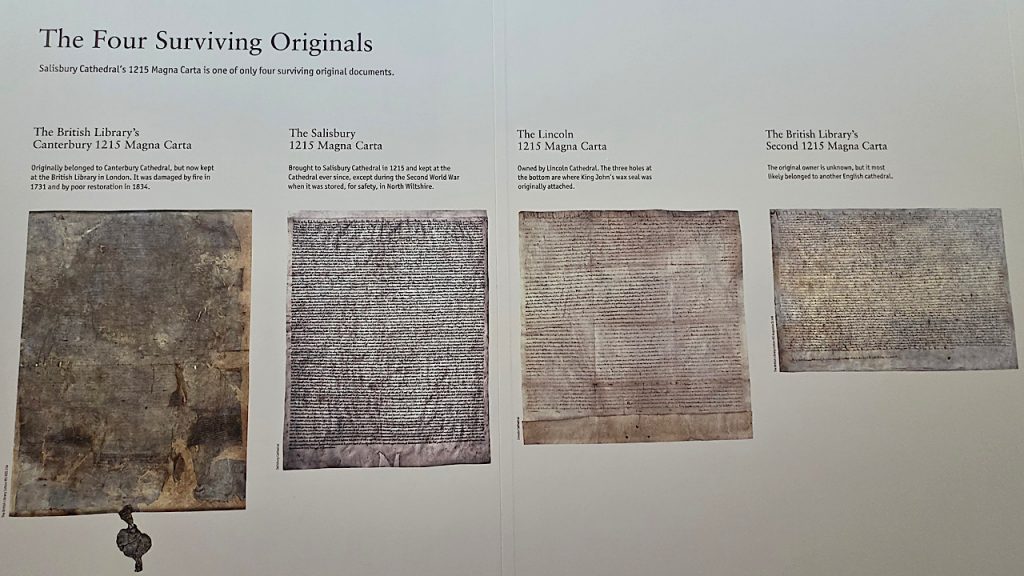
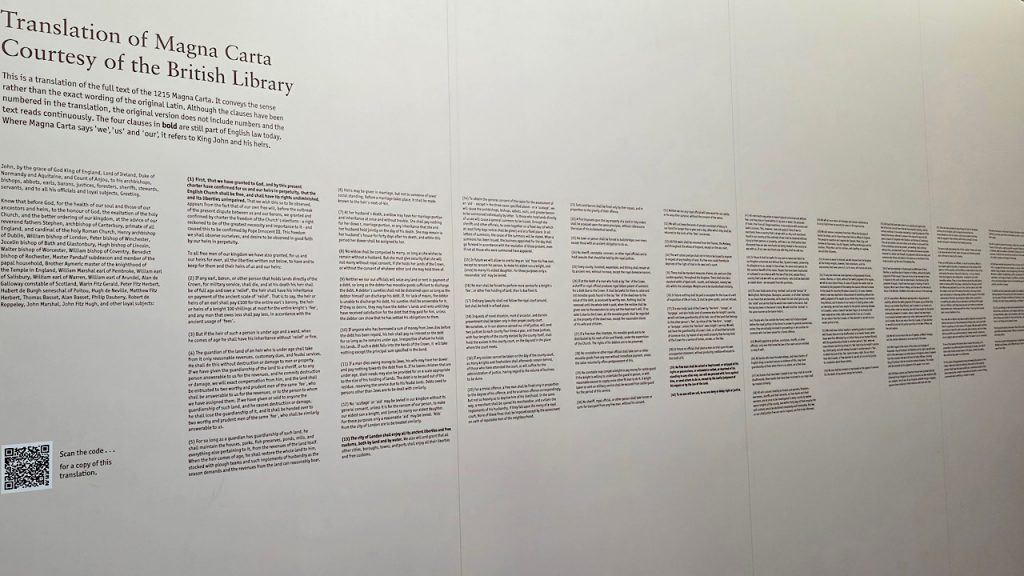
As mesmerising as it is, there will be one further draw that cannot be ignored. The Magna Carta. Included in your ticket price, you can gain access to a private annex within the church grounds that protectively houses and tells the story behind this most important of documents created in 1215. The symbol of justice, fairness and human rights still today plays a role in our legal system and laws. Of the four documents written, this is the best preserved and is quite magnificent. To see laid out in front of you a small handwritten sheet that encapsulates laws, that today still ring true, is quite a humbling moment. 800 years ago the beliefs and values have a role to play more so today than ever. Perhaps we need more heedance.to those medieval thoughts that need to play their role in our cultural evolution.
5. Old Sarum – Salisbury’s original settlement
If everything we have documented so far feels impressive, then hold onto your britches. It’s about to get even better as we head into the final chapter of our Salisbury guide.
There are still a few places around the world where our heritage is still clinging on, like roots of an ivy hoping to change future’s fortunes. A past that may seem entirely alien to us today, yet that shaped who we are and the world that we live in quite magnificently. Salisbury is one of those places. And it goes way beyond the era of the medieval world.
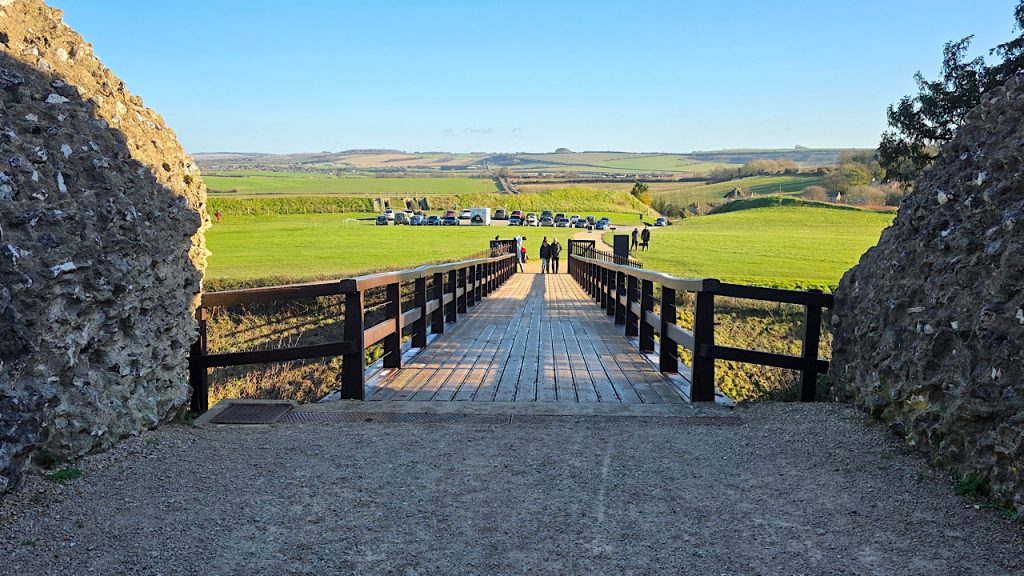
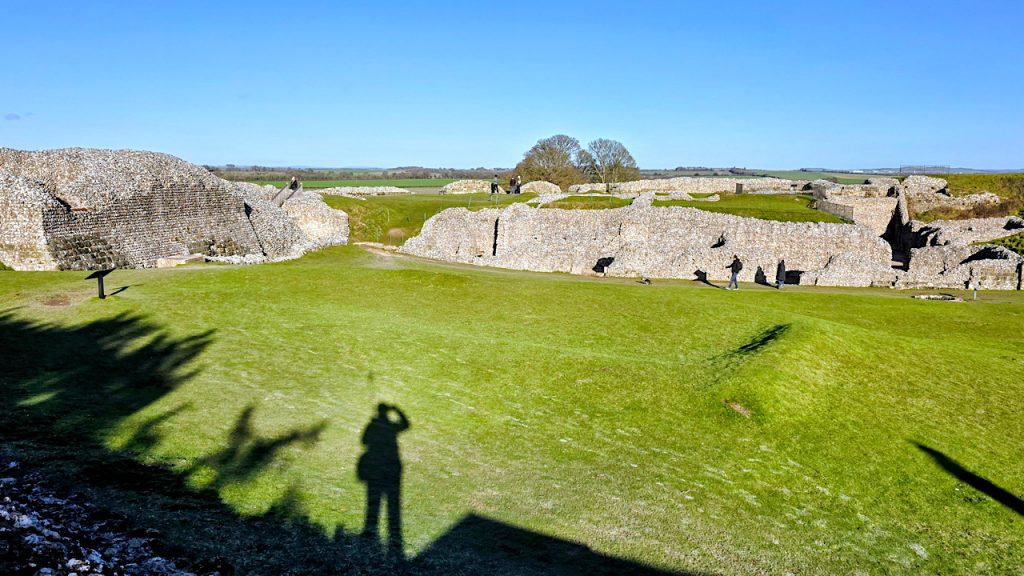
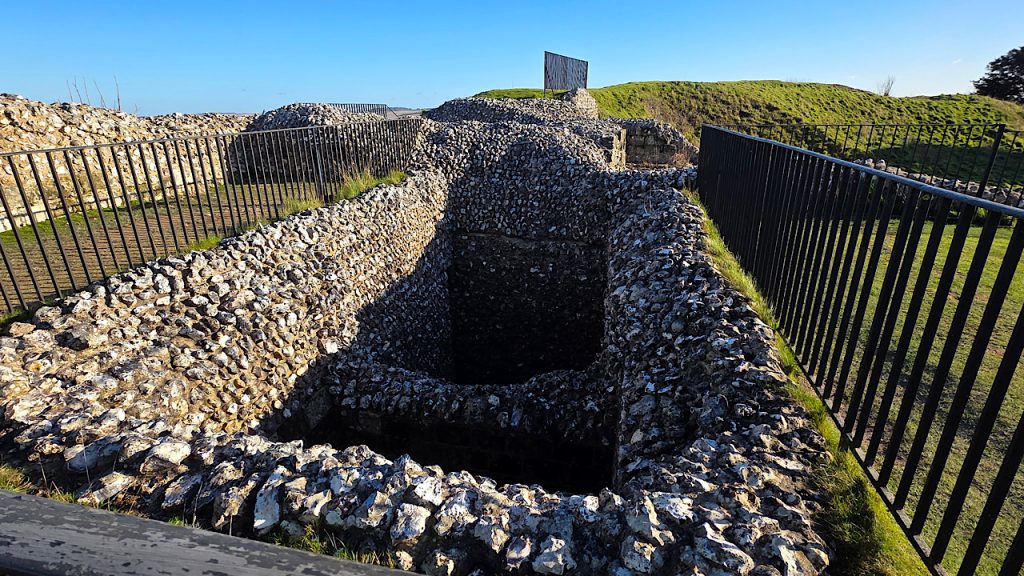
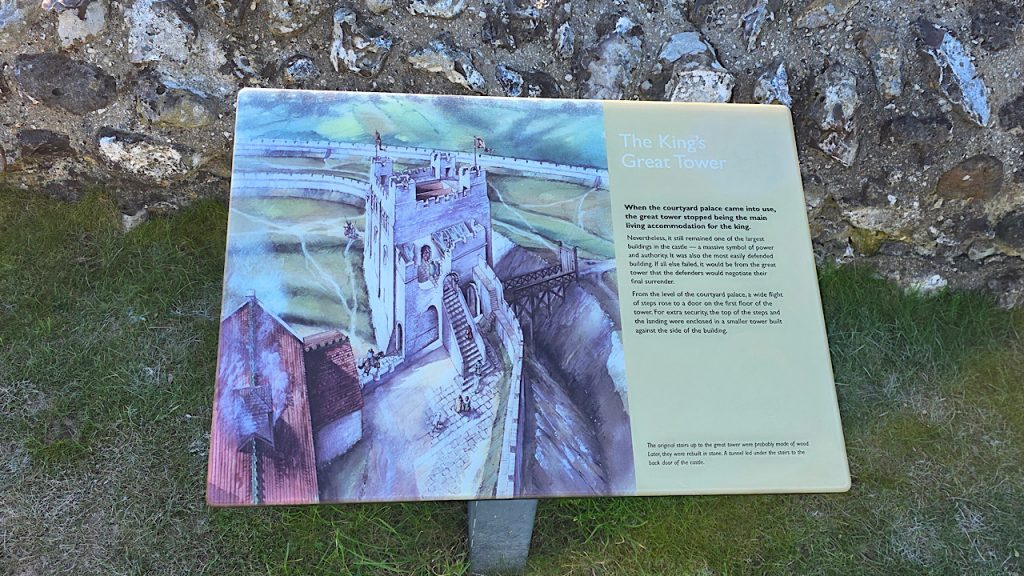
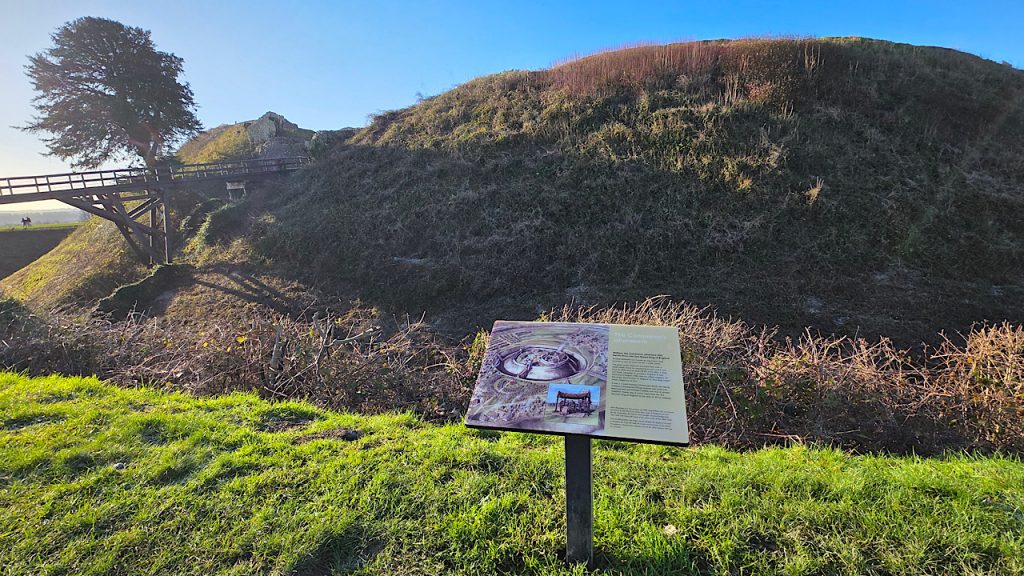
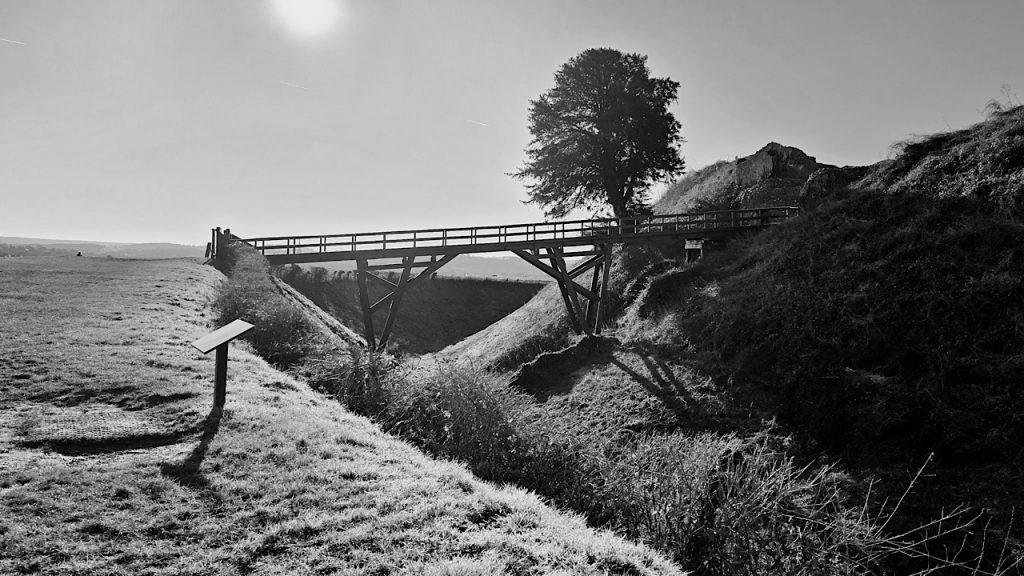
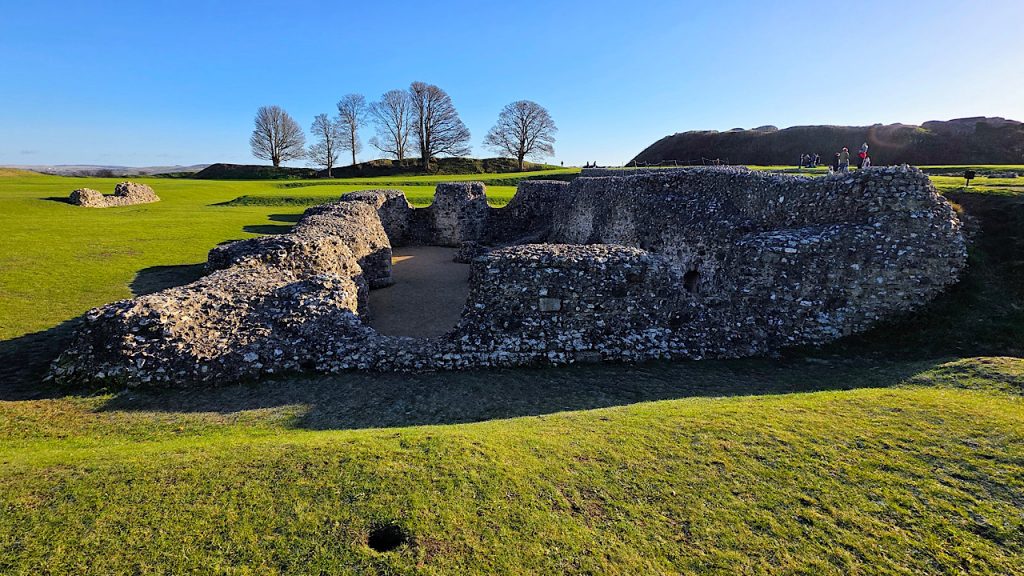
Walk just 2.5 miles north, along the river (or catch the R11 bus) and you will access a settlement that goes back to the Iron Age. Its prehistoric ramparts are the first thing that strike you, together with the 360 degree vista around the Wiltshire countryside. It is easy to see why someone would build a settlement here. For thousands of years people lived here, worshiped here and fought here. There was even a royal castle that William the Conquerer founded. The original cathedral still has its foundations etched forever in the earth as a mark of respect for a bygone era.
For a ticket price of £7.20 on the day and £5.90 on line in advance, you can walk around these impressive walls and just marvel at how they survived the wild winds that blow up here. No wonder the settlement was disbanded in the early 1200s in favour of the site of today’s Salisbury. Stones from Old Sarum were used to build New Salisbury, which is why so little of it remains, although the sense of you get of that historic chapter still rings true.
There is a car park up at the monument and out of season it will accommodate a motorhome and camper van, although the access is narrow. So I would avoid visiting with your vehicle in high season. It also costs £4 for the day to park here, on top of your entrance fee.
And finally – some practicalities
We hope that we have whetted your appetite for a visit to Salisbury and all that it offers. What a gem of a city that sits in the shadows of the New Forest.
Getting to Salisbury is a breeze. If you fancy a stop off en route south on the A303, then Stonehenge is worth a visit, if you’ve not been before. Or Avebury is also another great sacred site. Then you are no more than 30 minutes drive to Salisbury depending on traffic and the time of year.
If you come by car or camper, you could park in the free car park at the Spitfire Rugby Car Park, which can be located here. You can actually park here overnight. Then you can then pick up the R11 bus into town, or you could do the 30 minute walk instead. It is also worth mentioning at this point that there is a Camping Club site located here too. For more details click here.
We chose to camp at the ACSI discounted site up at Salisbury Racecourse. Coombe Caravan Park is a wonderful setting and is just an hour’s walk through the Golf Course. Alternatively you could pick up a local taxi to drop you in.
So Salisbury, whether you love shopping, eating, history or walking will serve you well. We hope you have enjoyed this little peek into this surprising city and that it will call you, like it did for us.
0 Comments