
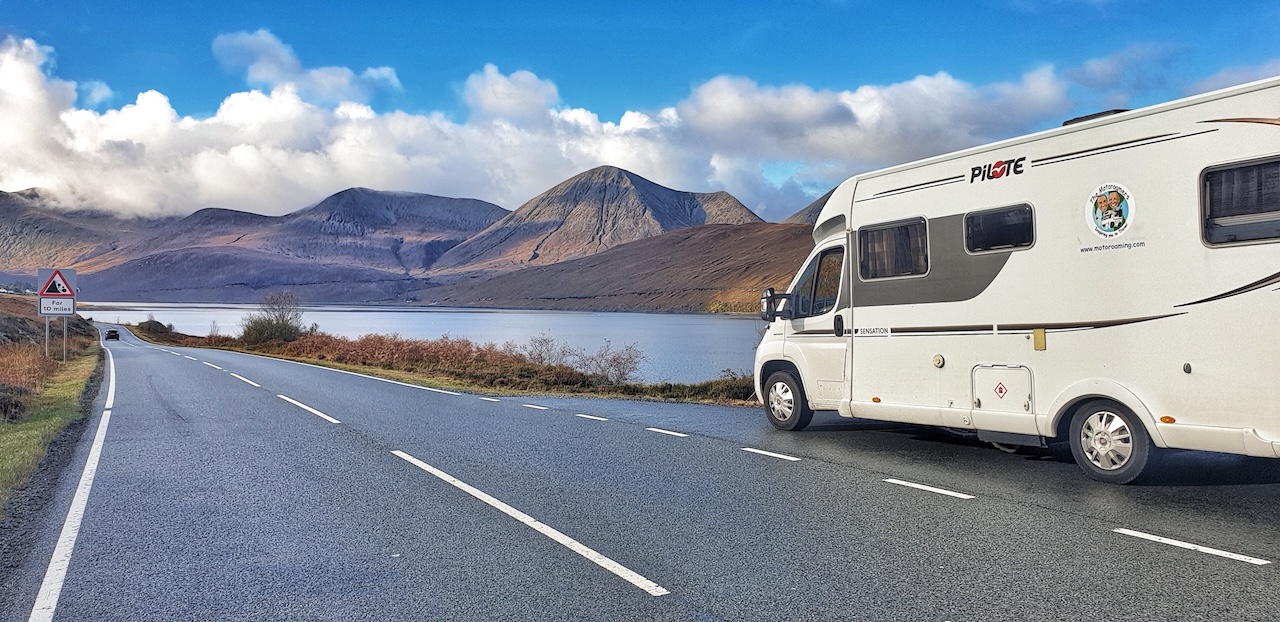
Many of us love the planning side of van life. We’ll happily spend an evening pouring over routes, ferries and service points. But what the long hours in the cab and the trips to the water tap ask of our bodies rarely gets that sort of thought. Today we give our bodies the attention they deserve, so we can keep doing what we’re doing.
Disclaimer; we have been paid to create this article with links to the Huuman.life fitness app.
Over our ten years on the road we have generally moved on every couple of days, but we are learning, finally to do far more slow travel and we like it. Our bodies and our minds like it too But irrespective of your age, travelling is tiring. Whether it is filling up, emptying, planning or generally having a nice time exploring cities or the countryside, we are asking a lot of our bodies when we’re on the road, Over the years, we have seen the van life community getting younger, with more families now home schooling as they travel, so it never hurts to start shaping our travel habits mindfully.
In this blog, we look at the ordinary parts of a week on the road, from the driving seat to a wet afternoon in the van, and share a few simple ways to make each one easier on the body. You won’t need a gym for any of it. Towards the end, there’s also a section on what to do if you have an accident whilst travelling, which if you’ve been following us for a while know bears a significant amount of relevance after breaking my ankle in Morocco.
1. Driving Days and the Two-Hour Stop
On our drive down through France in January 2026, we set ourselves a limit of four hours a day and in fact we apply this rule whenever we travel. And of late we have adapted this slightly to ensure that if we have a long driving day, then we have a rest day immediately afterwards. And if we’ve got services to do and shopping, then our drives become a lot shorter. Our energy needs managing and we must be kind to ourselves.
Whatever your own limit, Rule 91 of the Highway Code recommends a break of at least 15 minutes after every two hours of driving. It also says not to set off tired, and to stop somewhere safe if you start to feel sleepy.
Those fifteen minutes are a good chance to get the body moving again. Let’s face it, a long driving day is about as long as most of us ever sit still, and the NHS suggests breaking up long periods of not moving with some activity.
- TOP TIP; set a reminder for the two-hour mark before you pull off the pitch. It’s far too easy to push on for another half hour.
- Walk before the kettle goes on. A five-minute mooch round the parking area gets the legs going before you sit back down.
- Get the children moving too. A run around or a game of catch at the picnic area both count, and children aged 5 to 18 should aim for an average of 60 minutes of moderate or vigorous activity a day across the week.
- Swap seats if you both drive, so neither of you ends up doing all the driving on the long days.
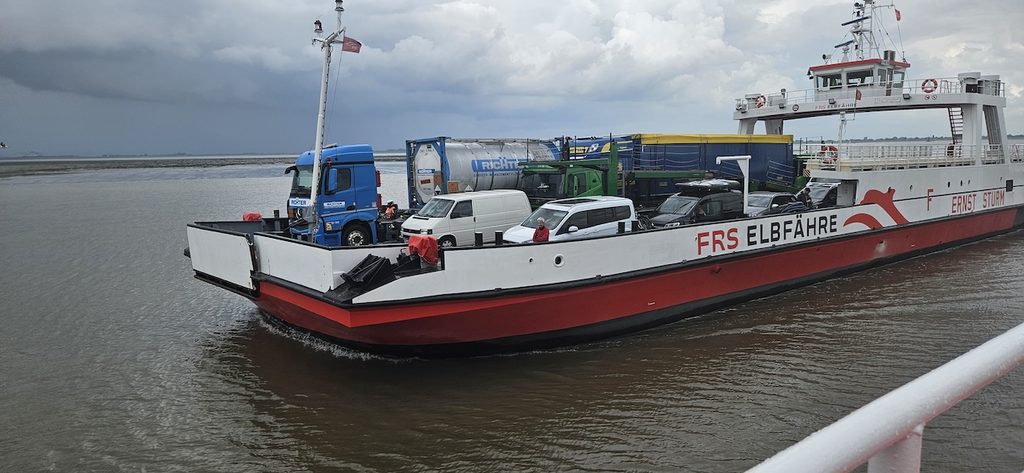
- If time and budget allow, let a ferry do some of the work. On our way up to Norway in 2025, the Elbe ferry at Wischhafen broke up a long day nicely and gave us both a rest, although we did wait a good hour for it at lunchtime.
2. Routes, Stopovers and Going Back
A long run like ours from Venice to Rotterdam could easily have turned into a few days of motorways and little else and especially through Germany, this is no fun at all. And, we’re not great fans of long driving days, but now and again they serve a purpose, so it’s worth giving the route a bit of thought before you set off.
- Choose stopovers with something on the doorstep. An aire a short stroll from a town or a river path means the driving day ends with a wander and a look around.
- Save the motorway for a Sunday if you can. Most countries restrict lorries on motorways on a Sunday, so it makes a perfect day to travel a long distance. It makes the drive was much more pleasant.
- Keep a bit of spare time in your plan in case a place tempts you to linger or take a detour. I’m a great one for asking locals or those more knowledgable than me for top tips. We can’t always work their recommendations in, but when we can we like to have a bit of flexibility to do unplanned stuff.
- If you’re travelling as a family, agree on the plan for the day, so each stop has something for everyone.
And for the return journey? Well we make it part of our travel philosophy to ensure that ‘going back’ is as much part of the adventure and not just a return home. Finding UNESCO sites or natural beauty to walk and cycle feels important to our general well being.
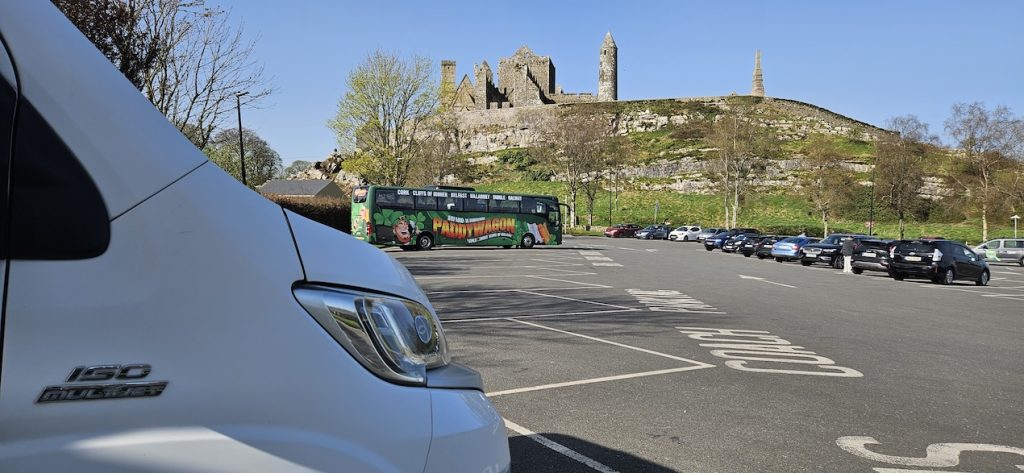
When our ferry home from Ireland was looming a few years back, we made the journey count with a detour through Tipperary to see the Rock of Cashel. It wasn’t on our list, but my research threw it as an option and it was such a lovely detour, that we could have so easily missed.
3. Steps, Cobbles and the Way Down
So many of Europe’s prettiest towns sit on hills, all cobbles and steep lanes, and the beach is often at the bottom of a long flight of steps. Stronger legs make all of that a lot easier.
So if a big hike like Preikestolen in Norway is on your list for next season, start some strength work a couple of months beforehand and aim for at least twice a week. The rainy-day ideas further down will get you going. My new Fascia and Lymphatic Reset exercises are perfect for general health and specific hiking options.
- Take walking poles for the steep bits. They let your arms take some of the load on the way down.
- Practise on a low step. Find a solid one with a rail to hold, in town or on the campsite, then step up and back down again, taking your time on the way down. Up to five with each leg is plenty to start with.
- These days I have to be really careful with cobbled streets, so wearing the right shoes is critical to me now. It may not suit the outfit, but my physical health matters far more than how I look. I lost that need a long time ago.

4. Water, Cassettes, Bikes and Gas
Our stopovers come with their own list of jobs. For most of us that means topping up the water, emptying the cassette, lifting the bikes on and off and, for anyone on exchange bottles rather than refillable LPG, swapping the gas. Most of those mean lifting and carrying and potentially pressure on our back and shoulders.
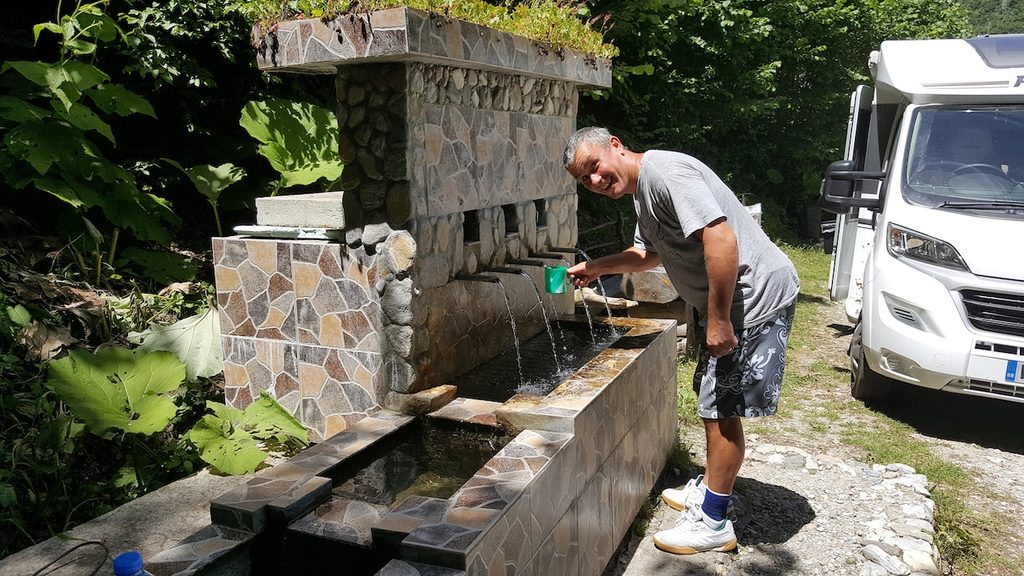
Did you know that a litre of water weighs a kilo? No nor did I. Now that is a serious little workout just filling up, especially if you are off-grid, you can’t get to a service point or the connection to the tap doesn’t fit! That has happened so many times!
A full, standard 6 litre water bottle, like the ones we use to fill up, means a twelve kilo weight balancing up both sides. That’s more than we’d use in a gym! Mind you, carrying heavy shopping bags counts as strength work too. It just pays to use the right technique.
The Health and Safety Executive’s advice on lifting was written for workplaces, but most of it works just as well at a service point. We just don’t usually pay attention to those sorts of guidelines – but we must listen to our bodies most importantly.
- Keep it close. Tuck the load in by your waist, with the heaviest side against your body.
- Turn with your feet. Point your feet where you’re heading, and DO NOT twist your body whilst you’re holding a full container or cassette.
- Use a halfway point. For a long lift from the ground up to shoulder height, rest it about halfway up on a table or bench and change your grip.
- Split the load. Two smaller containers are easier to carry than one big one.
- Make the high bike rack a two-person job. If it’s more than you can easily manage on your own, wait for a second pair of hands.
5. Sleeping Well on a New Pitch
The bed comes with us, which helps, although the light, the noise, the temperature and sometimes even the slope change with every new pitch. Especially if you happen to be in Scandinavia dealing with the its Midnight Sun.
The NHS advice on sleep problems names noise and a room that is too hot or cold among the most common causes, and in a van you can get both plus the addition of snorers, noisy neighbours and falling acorns. They all add up to the challenge of life in a tin can, especially when we acknowledge that adults need between seven to nine hours sleep, on average.
- Make it dark and quiet. Draw the blinds, and stash an eye mask and ear plugs by the bed for noisy aires, ferry ports and the odd lively neighbour.
- Give yourself at least an hour to wind down before lights out, maybe with a chapter of your book or a warm shower if the tanks allow. I love going to bed before Smiley and just chilling with some meditation music or just a bit of scrolling.
- Close up early in a heatwave. Keep the blinds and windows shut whilst the sun is on the van, then open everything up once it cools down outside. If you’d like to see what our first heatwave was like, check out our recent video, Our Van Reached 47°C! Our Serbian Summer was another experience altogether.
- Black out the midnight sun. In the far north in summer, black-out curtains or closed shutters help, as does an eye mask, and your body adjusts within a couple of weeks. Whilst we were touring Sweden and Norway in 2019, adjusting to the light nights was definitely a new experience and there are definitely tricks to try. There is more on that in our ten tips for touring Sweden in a camper.
- If like me, you experience ‘hot’ moments and wake up in the night, then I recommend not reaching for that passifier. You know the one I mean. Your phone! The light and stimulation is actually the opposite of what you need to get back to sleep. I focus on my breathing, especially the breath sensation breathing and this generally works in sending me off again. Alternatively, take 60 seconds to look at a specific spot in the van and focus on it. This will signal to the brain through your eyes that it is time to rest and it will trigger you into sleep mode.
6. Rainy Days in the Van
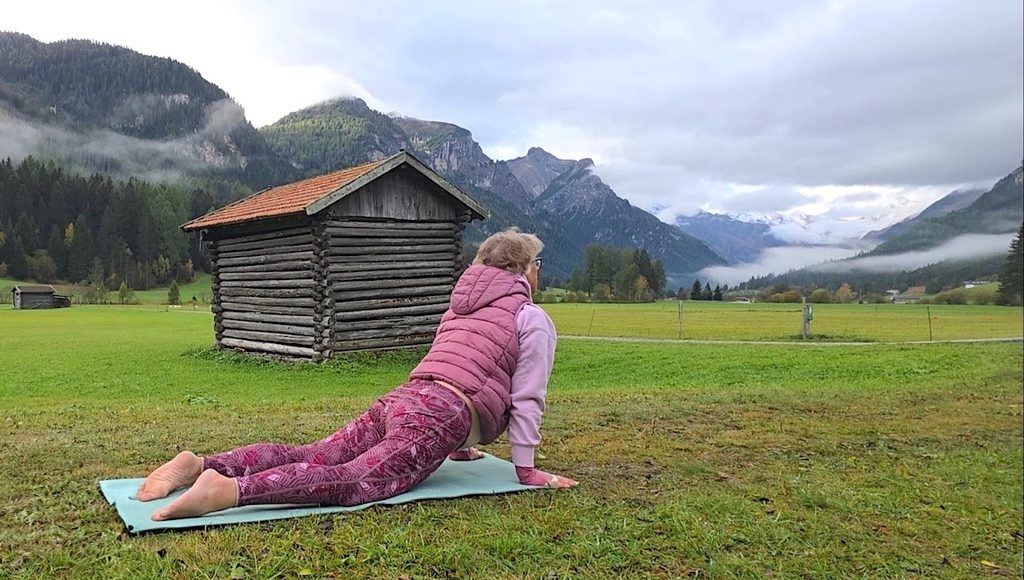
In one of our Ask us Anything features last year, a reader asked: “When you get a spell of bad weather, what do you do if you are confined to being indoors?” If we’re honest, long wet spells get us down too. My answer then was; a bit of motorhome yoga, and failing that, on with the wet weather gear and go on out anyway, or a drive to somewhere drier. We’ve done that a few times.
That is where my Freedom to Move videos come in. You can pick and mix them to suit the time, the space and the weather you’ve got, from the short Breathe to Flow video up to the 30-minute Combo Reset. And there is a video waiting in the wings, where I show you the Reset Routine actually inside the van. So keep your eyes open for that.
Ten minutes of strength work pairs nicely with the Yoga videos, and the NHS strength exercises can be done at home – our home just happens to have wheels. If you’re home schooling, those ten minutes also make a good break between lessons, and older children can join in with the sit to stand and the wall press-ups.
- Sit to stand from a solid seat without wheels or arms, feet flat on the floor. The end of a fixed bench seat can do the job, as long as the table leaves you room to lean forward and stand up. Stand up slowly using your legs, not your arms, then sit back down just as slowly.
- Wall press-ups, standing roughly an arm’s length from a solid wall.
- Arm curls, using a pair of full water bottles as light weights.
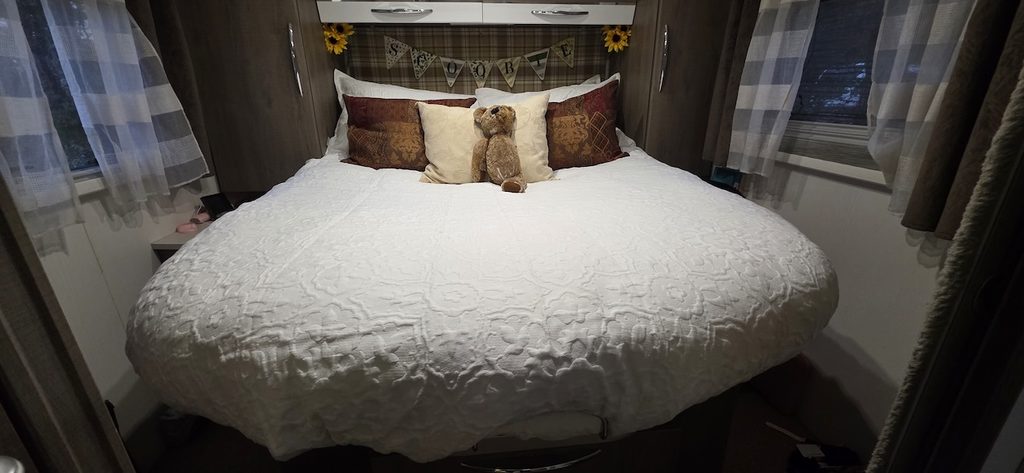
- I use the bed a lot for some of my yoga poses. It’s amazing how much you can actually do in a small space.
- Whilst you’re waiting for the kettle to boil, hold onto the worktop and rise up onto your toes, hold for a few seconds then release. This works our calves and the veins that help us support our heart health.
Start with about five of each and build up slowly. Over time, aim to keep going with each one until you need a short rest, and do the routine at least twice a week. If you like a bit of structure, the strength sessions in the huuman app are one way to keep that twice-a-week routine going wherever the van is parked. And sometimes an app or following videos gives you a great starting point for doing exercises in the right way until you find your feet and get into your own routine.
A little caveat though. If you haven’t exercised for a while, or you have a medical condition, speak to your GP before you start.
7. Eating Well, Especially if Travelling Long Distances
It’s all too easy when you’re heading somewhere in the van, to simply crunch the miles. Stopping for a sandwich, eating on the hoof and being too tired to cook at night. Reminiscent of our corporate days perhaps.
But it just takes some organising and buying the right ingredients ahead of time. If like me you happen to be following a low carb regime, then this can work in your travelling favour, as a quick salad or protein snack can be just the job. But reaching for the sugary snacks or simply not having enough water on board, means that we are not fuelling ourselves from the inside out. And for an odd day or two, that’s not too challenging, but it’s not a good habit to get into.
So I make sure that I have a freezer full of easy to pull together, or even pre-prepared meals that you can simply heat up. This bit of organised ahead of the game approach means you are less likely to reach for the high carb and empty nutrient bars just to take the edge of your hunger whilst at the wheel. If you fancy some snack or meal ideas, then don’t miss my Karen’s Keto Kookbook eBook, which you can download for free here.

8. What If You Have an Accident Whilst Travelling?
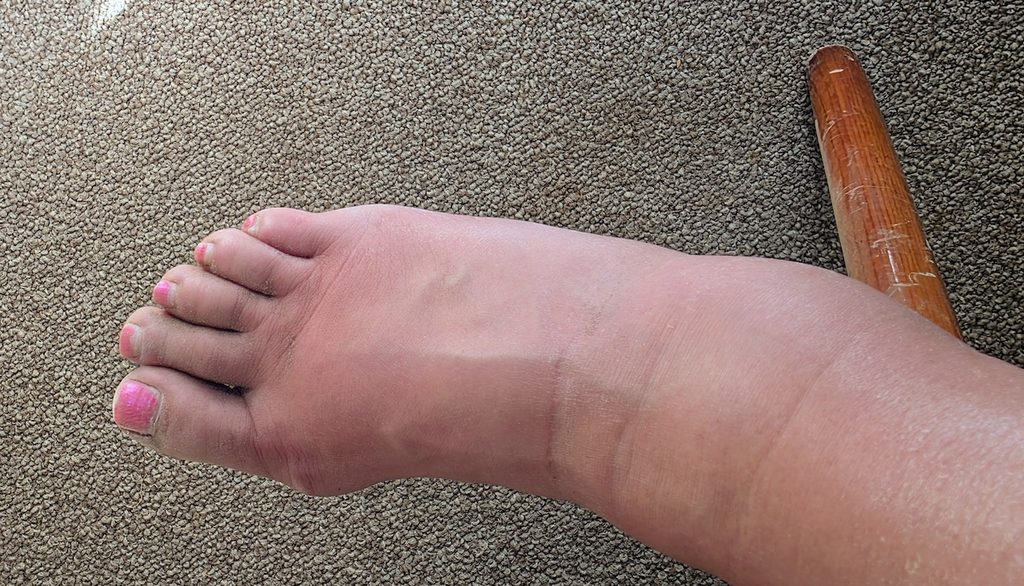
I broke my ankle in Morocco in March. It meant a hospital visit and months of rehab, which in a van was a challenge, in some ways, but it didn’t stop us. Once I could manage a short walk with a stick, then the world was my oyster and we tried to find different ways to explore that didn’t involve too much being on my feet. So whilst in Italy, we managed to explore Polignano a Mare by boat and electric Tuk Tuk instead. What a great way to see a town without the building frustration of not being able to do what you used to do.
After my experiences, here are just some of the things we learned together about handling accidents whilst on the road;
- Know what your GHIC covers. If you have a GHIC or EHIC, it gives you medically necessary state healthcare in the EU and some other countries on the same terms as residents, and everyone in the family needs their own card. It doesn’t cover private treatment or getting you home, though.
- Check your travel insurance. Make sure it covers hospital treatment, emergency transport and the full length of your trip, as many policies have a maximum trip length. There’s a handy checklist on gov.uk’s foreign travel insurance page. In our experience, UK insurers generally won’t start a policy once you’ve left, although some specialist insurers will. We have used TrueTraveller in the past and they have been great at sorting out cover whist we’re outside of the UK.
- TOP TIP; keep your policy number and your insurer’s emergency helpline in the van and on your phone, and let your travel companions know where to find them.
- Don’t wait and see. If you think you’ve broken your ankle or sense something else is going on for you, get medical advice as soon as possible. Even in Morocco we were able to get into a doctors, get scans and tests done relatively cheaply.
- Leave the heavy lifting alone. Until a broken ankle has healed, carrying heavy things is off the list, so ask for a hand with the water and the cassette if you are travelling solo. Otherwise it is down to your partner to do all those practical jobs for you.
- Follow the advice you’re given. You may need to see a physiotherapist, who can give you exercises to get your foot and ankle gently moving again. Once your ankle has healed, using it as normal stops it getting stiff, and it’s worth checking with your doctor before anything that puts a lot of strain on it, like a big hike.
- Buy whatever medical supports you need to heal quickly. I needed a pair of crutches, a boot and an ankle brace at various stages of my rehab and irrespective of the cost, just get it paid for.
- Getting to hospitals or clinics can be tricky in a motorhome, so make sure you plan your visits carefully. If that means a campsite and a taxi or being dropped off outside the clinic whilst your partner moves away to park safely – just work out a plan that keeps you safe, first and foremost and then your van and partner.
I found that wearing my boot started to affect my calf muscle within days, and building it back up takes steady work. You can see what to expect in huuman’s timeline of how quickly muscle fades and comes back. Just be mindful of DVT if you are wearing tight fitting support and make sure you Rest, Ice and Elevate regularly during the day. This will accelerate your recovery.
My Freedom to Move videos grew out of my own rehab. Once your doctor or physio says it’s fine to start, there’s more on gentle movement in my post on how to rehabilitate your body after injury.
Closing Thoughts
Life on the road needs careful thought – and not just on the map with the right direction. Giving ourselves the right investment is so important and it is often only a cursory thought. So I hope that this blog will give you some reconnection to what we already know as perhaps common sense, but give little air space to.
Of course it’s not a definitive list, so we’d love to hear how you keep moving on the road. Do share your own tips in the comments below. Kx
0 Comments